






Screenshot of the publication
On May 20, 2026, the research team led by Kang Zhang at the Artificial Intelligence Cross-Disciplinary Research Institute (AI-X), Macau University of Science and Technology (MUST), in collaboration with Guangzhou Women and Children’s Medical Center and several pediatric hospitals, published a research article entitled Pathogenic germline variations and cancer risks in pediatric patients referred for genetic testing in the internationally renowned journal Nature Medicine. Based on data from more than 75,000 children who underwent genetic testing due to suspected genetic disorders, the study systematically analyzed the association between cancer-predisposition-related germline variants and subsequent cancer risk in pediatric patients. The findings provide new clinical evidence for pediatric genetic counseling, cancer risk assessment, and long-term follow-up management.
With the widespread application of sequencing technologies in the diagnosis of pediatric genetic diseases, clinical genetic testing has become increasingly valuable not only for confirming hereditary disorders, but also for identifying germline variants associated with cancer predisposition. However, the long-term clinical significance of these variants in pediatric cancer risk has remained insufficiently understood due to the lack of large-scale follow-up studies. To address this question, the research team focused on 139 genes associated with pediatric cancer predisposition and integrated genetic testing results, clinical phenotypes, and follow-up data to systematically evaluate cancer risks in children (Figure 1).
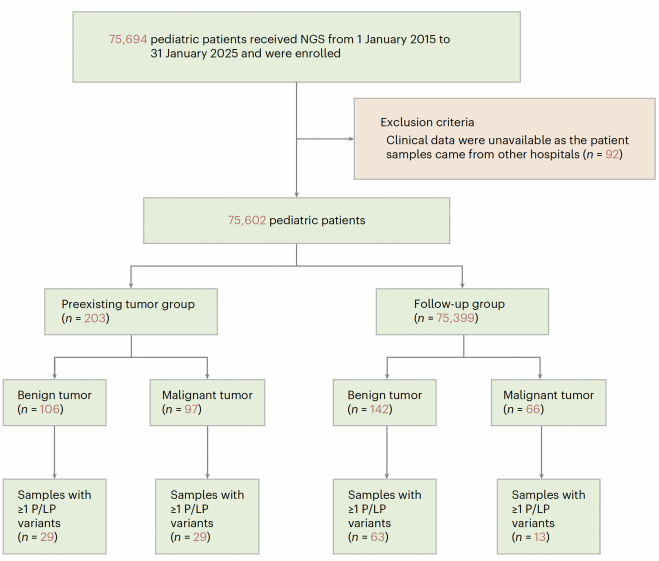
Figure 1. Study workflow
The study found that among 411 pediatric cancer patients, 134 carried pathogenic or likely pathogenic germline variants, accounting for 32.6% of the cohort. Frequently implicated genes included NF1, TSC2, RB1, and WT1. Among these, RB1 and WT1 were more commonly associated with early-onset pediatric malignancies such as retinoblastoma and Wilms tumor, whereas NF1 and TSC2 were closely linked to disease spectra including neurofibromatosis-related tumors, tuberous sclerosis-associated tumors, and hamartomatous disorders.
More notably, among 64,187 children without cancer manifestations at baseline who had follow-up data available, children carrying pathogenic or likely pathogenic germline variants showed a significantly increased incidence of subsequent malignant tumors (Figure 2). The study demonstrated that the incidence rate of malignant tumors in P/LP variant carriers was 3.23 per 1,000 person-years, significantly higher than that observed in the VUS-LP group and other variant groups. These findings suggest that certain cancer-predisposition-related variants identified during pediatric genetic testing may have important long-term clinical management implications.
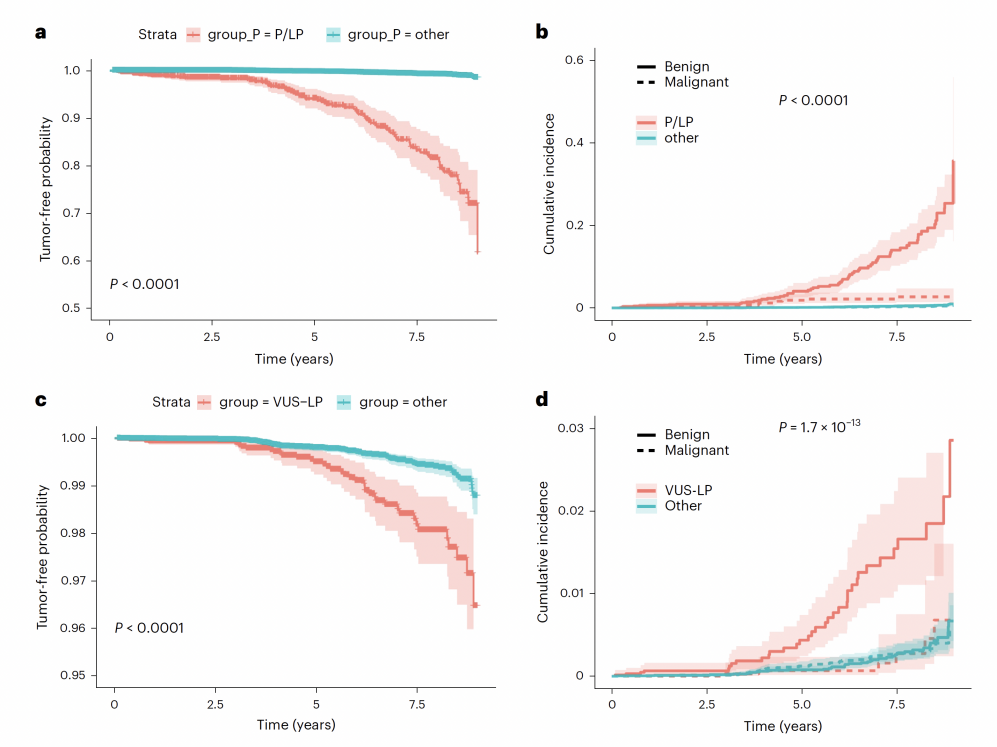
Figure 2. Follow-up analysis of pediatric cancer risk
The study further linked pediatric genetic testing for hereditary diseases with cancer risk management. The researchers emphasized that for children carrying pathogenic variants in cancer predisposition genes, providing a genetic diagnosis alone may not be sufficient. Instead, subsequent management should incorporate genetic subtype, clinical phenotype, family history, and disease spectrum to support genetic counseling, specialist evaluation, and individualized follow-up strategies. These findings may help advance pediatric genetic testing from merely “detecting variants” toward “risk interpretation” and “prospective management.”
At the same time, the research team noted that the study population primarily consisted of pediatric clinical patients who underwent genetic testing due to suspected hereditary disorders and therefore does not represent a general pediatric screening population. Accordingly, the study does not advocate universal cancer genetic screening for all children. Rather, it highlights the importance of standardized interpretation, risk stratification, and long-term management of cancer-predisposition-related germline variants identified through existing clinical genetic testing.
Kang Zhang stated that the Artificial Intelligence Cross-Disciplinary Research Institute (AI-X), MUST continue to promote the interdisciplinary integration of artificial intelligence, biomedicine, and clinical data science, with the goal of building a cross-disciplinary research platform for precision medicine and intelligent healthcare. The publication of this study not only provides important evidence for the clinical interpretation of pathogenic germline variants and cancer risk follow-up in children, but also reflects the Institute’s continuously expanding research efforts at the intersection of artificial intelligence and medicine. As genetic testing technologies and precision medicine continue to evolve, moving from “variant discovery” toward “risk assessment” and “prospective management” is expected to become an important direction for pediatric cancer early detection, genetic counseling, and long-term health management.

